The Halyna Font: A Handwritten Script for Digital Craftsmanship
In the meticulously structured world of web design, a human touch can be the most powerful signal. Amid the clean grids of sans-serif body copy and the strict hierarchies of layout systems, a well-chosen display font acts as a signature—a personal imprint that defines brand tone and captures user attention. For projects demanding elegance, warmth, or creative authenticity, the Halyna script font is a compelling tool for digital creators.
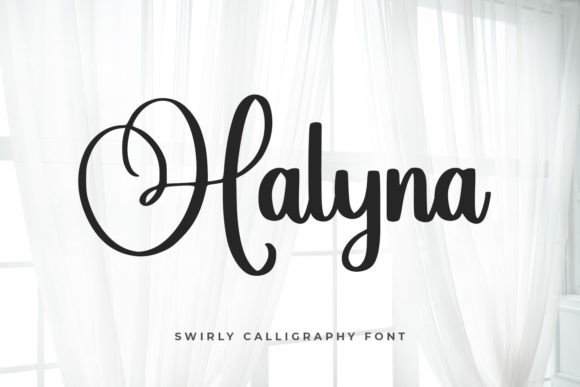
Halyna is a beautifully crafted handwritten font. Its character stems from a flowing, organic script style with gentle curves and consistent baseline rhythm. Unlike many overly casual or erratic handwritten fonts, Halyna maintains a degree of refined control, making it suitable for professional applications where personality must be balanced with clarity. Its visual personality is distinctly feminine, elegant, and approachable, evoking feelings of craftsmanship, personal invitation, and artistic detail.
Applying Halyna in Digital Layouts
The true test of any display font is its performance in live digital environments. Halyna’s strength lies in its ability to serve as a focal point within a structured layout, providing the emotional cue while letting more neutral typography handle the heavy lifting of readability.
Hero Sections & Landing Page Headers
For website hero sections, especially for brands in creative services, boutique e-commerce, wellness coaching, or premium digital products, Halyna can transform a simple headline. A phrase like “Welcome to Your Creative Journey” or “Handcrafted Designs” rendered in Halyna instantly establishes a bespoke, personal atmosphere. This visual hook increases engagement by differentiating the page from generic corporate templates, encouraging users to stay and explore.
Branding Elements & Consistent Identity
Beyond single headlines, Halyna can anchor a consistent online identity. Consider using it for the textual part of a logo on a portfolio site, for key section titles on a course sales page, or for recurring decorative accents in blog graphics and social media banners. This repetition builds a recognizable visual language. For a wedding planner’s website, Halyna used for service names (“Venue Selection,” “Day-of Coordination”) across pages creates a cohesive, thematic experience that reinforces the brand’s niche.
Call-to-Action Accents & Button Phrases
While Halyna should not be used for lengthy button text due to potential readability issues on small screens, it can be exceptionally effective for short, powerful CTA phrases within the button design itself, or for the headline immediately above a button. A phrase like “Join Now” or “Get Your Guide” in Halyna on a landing page can make the action feel more personalized and less transactional, potentially improving conversion sentiment.
Readability & Technical Considerations for Web Use
As a script font, Halyna is classified as a display typeface. Its primary role is for headlines, short phrases, and decorative elements, not for body copy. This is a crucial distinction for web usability.
For optimal readability, always use Halyna at a sufficient size. On desktop, this often means a font size of 36px or larger for a main headline. On mobile, due to reduced screen real estate, you may need to scale it even larger (e.g., 44px or more) to ensure the intricate letterforms remain clear and legible against backgrounds. Avoid using Halyna for any paragraph text, form labels, or lengthy navigational menus.
Contrast is paramount. Halyna performs well on both light and dark backgrounds, provided the color contrast ratio meets WCAG accessibility guidelines. When overlaying Halyna on imagery, ensure the background area behind the text is either uniformly dark or light, or use a subtle background overlay to maintain legibility. Testing across device screens is essential.
From a technical standpoint, verify the font license for web use. Most commercial font licenses for products like Halyna include webfont usage rights, allowing you to embed the font via CSS for your website or client projects. Confirm the file formats included; typically, you’ll receive OTF/TTF files, and you’ll need to convert or use a service to generate the necessary WOFF/WOFF2 files for efficient web loading. Also, check for character set support—many elegant script fonts like Halyna offer robust multilingual support, which is vital for brands with international audiences.
Building Visual Harmony with Font Pairing
A display font never works alone. Its impact is magnified by the typographic system it sits within. Halyna’s ornate, flowing nature demands a simple, highly readable counterpart for all other text.
A clean, geometric sans-serif font is the most reliable pairing. Think of fonts like Montserrat, Open Sans, Inter, or Poppins for body copy, UI elements, and smaller headings. This combination creates a clear visual hierarchy: Halyna provides the emotional, brand-defining top-level voice, while the sans-serif handles all functional communication, ensuring smooth scanning and reading.
For a more editorial or classic digital identity, pairing Halyna with a neutral serif font for body text (such as Lora, Merriweather, or Playfair Display) can work. This approach leans toward a “luxury editorial” feel, suitable for high-end goods, author websites, or sophisticated blog platforms. The key is to ensure the serif is not overly decorative itself, maintaining a clear subordinate role to Halyna’s display presence.
Practical Pairing Examples
- Creative Portfolio: Halyna for the artist’s name and project category titles, paired with Inter for all project descriptions, bio text, and contact information.
- Boutique Online Store: Halyna for product collection headers (“Spring Collection,” “Handmade Ceramics”) and promotional banners, paired with Open Sans for product names, prices, descriptions, and checkout UI.
- Coaching or Wellness Website: Halyna for program names and inspirational quote graphics, paired with a friendly sans-serif like Poppins for all service details, blog articles, and FAQ content.
Halyna and Conversion-Focused Design
In conversion-driven layouts, such as SaaS landing pages or product sales pages, every element must balance persuasion with clarity. Here, Halyna can be strategically deployed to soften a predominantly technical or corporate page, adding a human element that builds trust.
Use it sparingly but powerfully. Perhaps for the main value proposition headline, or for the title of a key feature that emphasizes personal care or custom support. This creates moments of emotional resonance within a logical flow, guiding the user from interest to trust, and ultimately to action. The font’s handwritten quality subtly suggests individual attention and craftsmanship, values that can significantly elevate a digital product’s perceived quality.
For digital ads and social media graphics aimed at driving clicks, Halyna’s distinct style can increase ad recognition and memorability in a crowded feed. A consistent use across a campaign—for the ad headline—helps build a quick visual association with your brand.
A Note on Licensing for Digital Projects
When using Halyna or any premium font for commercial web projects, licensing is a foundational professional step. Ensure your license covers web embedding for live websites. This is typically required for client websites, your own online store, landing pages, and digital product interfaces. If you are creating digital templates (like WordPress themes or Canva templates) for sale, you’ll likely need an extended license that covers redistribution. Always review the specific terms from the font distributor. Proper licensing protects your work and respects the creator’s craftsmanship, mirroring the care you aim to express through your own designs.
Ultimately, Halyna is not just a font file; it’s a design asset for crafting specific digital atmospheres. Its value is realized when it’s thoughtfully integrated into a holistic typographic system, where its beauty serves a clear functional purpose: to attract, to define, and to humanize the digital space. In the hands of a web designer focused on brand tone and user experience, it becomes a precise tool for turning sterile layouts into memorable, engaging online encounters.